Satisfying Chill
- 0.0
- Rating
- 10.00K
- Installs
- Free
- Price

 Analysis by App-foxy
Satisfying Chill is a small trivia game with a noticeably softer personality than the usual rapid-fire quiz. I approached it expecting a light distraction, and its strongest appeal turned out to be the way it frames simple play around dreamy cakes, orderly kitchens, and gentle mini-game moments. The presentation aims for comfort rather than pressure, making it easy to pick up when I want something undemanding.
That mood is important because the game is not trying to compete with a serious knowledge test. Its store short description, “Satisfying Chill,” is a good summary of the intended experience, but the useful question is whether the relaxed style gives the trivia category enough substance. My answer is mixed but positive: it works best as a brief, calming break, especially for players who enjoy visual tidying and decoration as much as answering questions.
GameSky Lab is the developer behind the release. The game is free, carries an Everyone age rating, and is listed for devices running Android 7.0 or later. It has reached over ten thousand installs, while its displayed average rating is 0.0, so I would treat the public reception as too early or too thin to use as a meaningful quality signal. The current version is 1.0.4, and the release date is April 6, 2026.
You May Also Like

 AccuWeather: Weather Radar
AccuWeather Review: A Quick, Clear Forecast for Everyday Decisions
For everyday plans, the best forecast is the one you can understand quickly. AccuWeather makes rain timing, radar, and local conditions easy to act on, with a few trade-offs.

 Hill Climb Racing
Why Hill Climb Racing Still Turns Crashes Into One More Run
A tiny car, a bumpy hill and one more upgrade: Hill Climb Racing keeps resurfacing because its simple chaos makes every near-miss feel personal.

 AliExpress - Shopping App
AliExpress Makes Global Shopping Feel Personal, but Shoppers Bear the Risk
AliExpress turns a global marketplace into a pocket-sized discovery engine. Its reach is useful, its shopping loop compelling, and its trade-offs easy to miss.

 Lords Mobile: Kingdom Wars
Lords Mobile Is a Kingdom-Building Routine, Not a Quick Match
A case-by-case verdict on the building, battles, device demands, and social commitments that make Lords Mobile rewarding for some players and exhausting for others.

 PDF Scanner app - TapScanner
TapScanner Makes Paperwork Easier to Capture, Check, and Share
TapScanner makes scanning with a phone feel less like a rescue operation and more like a dependable step in getting work done. Its capture tools are useful, though not flawless.

 Block Blast!
 Shows How Much a Puzzle Game Can Leave Out
A quiet grid game shows why puzzle players increasingly value instant clarity, repeatable skill and low-pressure play—and where the genre still needs to catch up.
More From Our News Desk
View All News


A gentle first impression built around small tasks
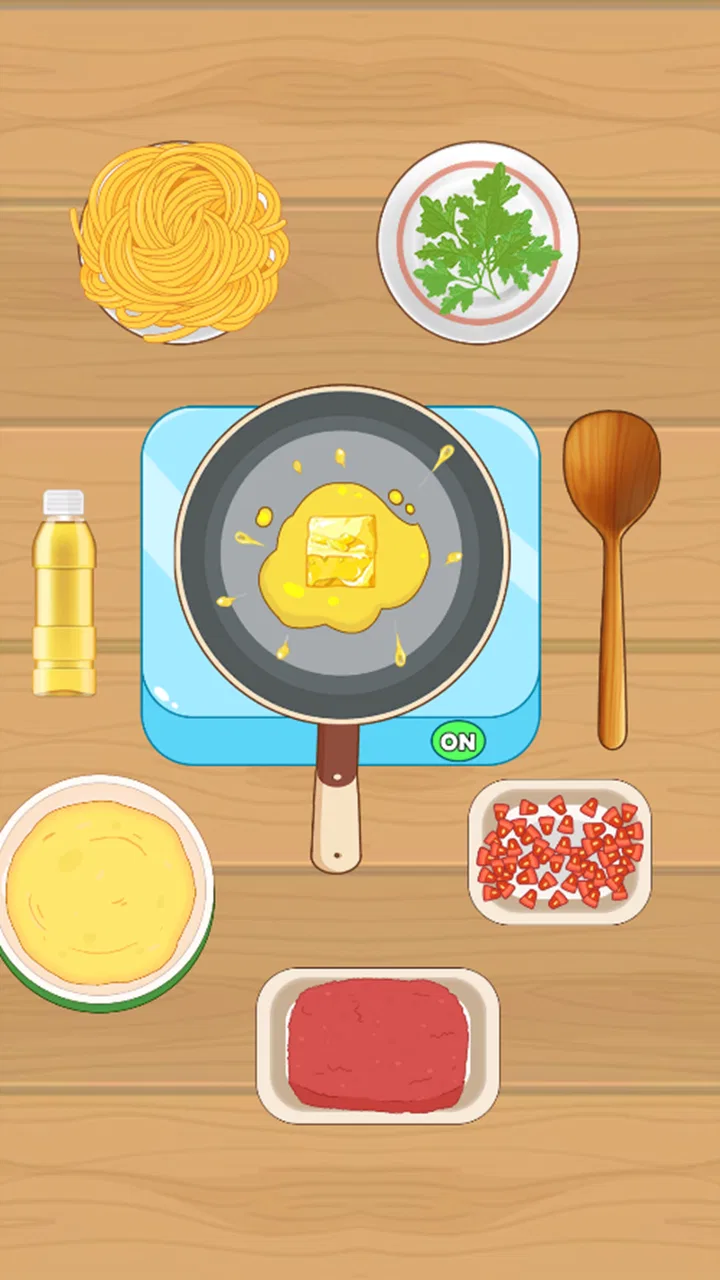
The first thing that stands out is the contrast with conventional trivia apps. Many quiz games open with a strong competitive push: timers, streaks, rankings, or a large question bank presented as the main event. Here, the visual promise points toward a quieter routine. Cakes invite decoration, kitchens invite arranging, and the mini-game framing suggests that progress is meant to feel pleasant rather than demanding.
I like that choice because it gives the game a clear identity. The setting is not just a background placed behind questions; it appears to establish the emotional reason to keep playing. A player who wants a calm activity can understand the appeal immediately. The experience feels suited to a short pause after work, a few minutes before bed, or a low-energy moment when a more competitive game would feel like effort.
In an everyday scenario, I could see myself opening it while waiting for an appointment. Instead of committing to a long round of a strategy game or starting a quiz session that requires concentration, I would use the cake and kitchen activities as a gentle reset. The attraction is the low emotional cost: I can engage with a small task, enjoy the visual theme, and stop without feeling that I have abandoned a serious challenge.
That same softness will not suit everyone. If you open trivia games to learn specific facts, test memory under pressure, or compare your score with other players, the cozy framing may feel like a distraction from what you actually came for. The game’s appeal depends on whether you see trivia as a relaxing activity or as a competition. I would choose a traditional quiz app instead when accuracy, subject depth, and measurable improvement matter more than atmosphere.
Why the cake setting matters
Cakes are a smart subject for this kind of game because they naturally support visual decisions. Decoration can be read at a glance, and small changes can make a scene feel more complete. Kitchens add a second layer of familiarity: arranging, cleaning, and restoring order are everyday actions that translate well into short interactive tasks.
The setting also gives the pacing somewhere to go. A question by itself can feel disposable, but placing it within a broader routine makes each action part of a recognizable world. I found that this kind of framing can make a modest task feel more rewarding, even when the underlying interaction remains simple. The game does not need an elaborate story to create a sense of continuity; the repeated language of cakes, counters, and tidy spaces does much of that work.
One useful way to approach it is to stop expecting every moment to deliver a substantial trivia lesson. The better mindset is to treat the questions as one ingredient in a larger relaxation loop. I would play it when I want a little mental engagement without turning the session into study time. That distinction helps set realistic expectations and prevents the game from seeming weaker simply because it is not a conventional quiz platform.
Visual language that supports the mood
The art direction is most effective when it keeps the screen readable and the actions understandable. A cozy game can easily become cluttered with decorative objects, but the cake-and-kitchen theme works best when the important item remains obvious. Clear visual grouping matters here: the player should be able to tell what needs attention, what has already been completed, and what is merely part of the scenery.
I also appreciate the thematic consistency implied by the presentation. Dreamy cakes and tidy kitchens belong to the same emotional space, so the game does not feel like a random collection of unrelated mini-games. That coherence is a real strength. Even if individual activities are brief, the setting gives them a shared identity and makes the overall package easier to remember than a generic series of trivia screens.
There is a trade-off, though. A strong visual theme can make a game feel inviting before it proves that its mechanics have enough variety. Players who are drawn in by the artwork should give the interactions a fair trial rather than assuming the atmosphere alone will carry a long session. For me, the art direction works as an invitation and a mood setter, not as a replacement for meaningful challenge.
Sound and the rhythm of a quiet session
Sound is especially important in a game that advertises relaxation. Harsh effects, abrupt transitions, or an overly urgent pace would undermine the kitchen-and-cake setting. The right audio approach should make each small action feel finished without demanding attention from the player. I found the overall concept more convincing when I treated the sound as part of the room’s atmosphere rather than as a reward system that constantly asks me to react.
The pacing benefits from that same restraint. A cozy mini-game should leave room for the player to notice what is happening. If every action is compressed into a race, the tidy setting becomes cosmetic. The appeal comes from the pause between decisions: seeing the space, choosing what to do, and enjoying the sense of completion afterward.
This makes the game a better fit for background relaxation than for intense concentration. I would not choose it when I want a fast chain of difficult questions or the excitement of a close score. Its rhythm is more appropriate for a player who wants to alternate between light thinking and visual satisfaction. The result is a calmer loop, but also one that may feel slow to people who measure value by how much content they can clear quickly.
A practical tip is to play in short sessions rather than forcing a long run. The game’s concept is built around small satisfying actions, so stopping after a few completed moments can preserve the charm. I would also avoid comparing its pace directly with a conventional trivia challenge. That comparison makes it seem underpowered, while judging it as a mood-focused game reveals why the slower rhythm exists.
How the mechanics fit the presentation
The central design question is whether trivia, decoration, and tidying feel like parts of one experience. In my view, they fit because each activity asks for a different kind of attention. Trivia brings a mental prompt, decoration brings visual choice, and kitchen organization brings a sense of order. Together, those actions can create a pleasant alternation instead of asking the player to repeat one interaction continuously.
The combination also broadens the audience. Someone who enjoys quiz questions may appreciate the change of pace offered by decorating. Someone who normally avoids trivia may be more willing to try it when it is surrounded by approachable visual tasks. That is a thoughtful direction for a casual game, because it does not force every player to find the same type of challenge enjoyable.
Still, the blend creates a clear limitation: players looking for a deep trivia system may find the knowledge component too light, while players looking for a dedicated decorating game may want more creative control than a mini-game format can provide. The game sits between those expectations. Its success depends on balance. If one element feels like a brief interruption rather than a meaningful part of the loop, the overall experience can lose momentum.
I would recommend deciding what you want before installing it. For a soothing mixture of questions and simple visual tasks, it is a sensible choice. For subject-specific learning, a large question library, or a complex decorating sandbox, a specialist alternative will probably serve you better. This is not a criticism of the concept; it is simply the consequence of trying to make several light activities share one compact package.
Small workflows that make the experience better
One of the most useful ways to play is to use the game as a transition between activities. Rather than opening it with the expectation of a long session, I would use it after finishing a task, before starting another, or during a short wait. The kitchen theme supports that routine because tidying has a natural beginning and end. Completing a small sequence can provide a clean mental break without taking over the day.
A second approach is to pay attention to the relationship between visual completion and trivia attention. I would handle the more orderly actions first when I feel mentally tired, then approach the questions once the screen feels settled. On a more alert day, I would reverse that order and treat the decorating or tidying as a reward after answering. This makes the same game feel different depending on my energy level, without pretending that it offers a full difficulty ladder.
A third insight is to judge progress by consistency of mood rather than by speed. Rushing through a calming game can remove the very quality that makes it appealing. I found it more rewarding to notice whether the presentation stayed coherent from one activity to the next: the colors, setting, sounds, and transitions should all support the same gentle intention. When they do, even a short session feels complete.
For families, the Everyone rating makes the game easier to consider as a broadly accessible casual option. I would still play alongside younger users if the goal were shared time, because the trivia prompts and visual tasks can become conversation starters. The game’s relaxed structure is more suitable for cooperative encouragement than for turning a session into a test. That said, adults seeking sophisticated knowledge content should keep their expectations modest.
What to expect from the current release
The current version, 1.0.4, presents the game as an early, focused experience rather than a mature destination for competitive trivia players. That is not automatically a problem. A compact game can be enjoyable when its core mood is clear and its activities are easy to understand. The important question is whether the available loop remains pleasant after the initial novelty of the cakes and kitchens fades.
Because the displayed average rating is 0.0, I would not use that figure to decide whether the game is good or bad. It offers no useful consensus to lean on, so the decision should come from the type of session you want. The install count, shown as over ten thousand, suggests that the game has found an initial audience, but it should not be mistaken for proof that it matches every player’s expectations.
The free price lowers the risk of trying it. I would recommend installing it if the setting appeals to you and you are comfortable with a casual trivia experience that prioritizes atmosphere. The main cost is not money but attention: if the loop does not match your preferred pace, you may quickly move on to a more focused quiz or decorating title.
Device compatibility is also straightforward for many older Android users because the minimum requirement is Android 7.0. That makes it worth considering on a device that cannot run newer, heavier games. I would still think about screen comfort and responsiveness on an older phone, especially for visual tasks that depend on tapping accurately, but the stated operating-system requirement keeps the entry point relatively broad.
Who will enjoy it, and who should skip it
I would recommend this game to players who like cozy trivia, visual tidying, cake decoration, and short activities that do not demand constant urgency. It is a particularly good match for someone who wants a gentle phone game during breaks, or for a player who finds standard quiz apps too sterile and decorating games too narrow.
I would skip it if your priority is serious general-knowledge practice, detailed explanations, competitive rankings, or a complex creative toolkit. A dedicated trivia app is the better option for building subject confidence. A full decorating game is the better option for players who want extensive customization. A puzzle game with escalating challenges is the better option for anyone who needs a stronger sense of mastery.
The game also may not work for people who dislike mixed formats. Some players want to know exactly what they are getting: either a quiz or a decorating experience. This title’s identity comes from combining those elements under one relaxed setting. That blend is its most distinctive feature, but it is also the reason it will not satisfy every specialist audience.
My atmosphere verdict
What I remember most is not a particular trivia prompt but the intended feeling of moving through small, pleasant tasks in a cake-filled kitchen world. The art direction gives the game warmth, the setting keeps the activities connected, and the pacing encourages players to slow down. Those choices make the experience more memorable than a bare quiz interface.
Its limitations are equally clear. The calm presentation can reduce urgency, and the mixed structure may feel too light for players who want depth in either trivia or decoration. The game is best understood as a compact mood piece with playable questions and tidy visual routines, not as a replacement for a dedicated expert quiz platform.
For me, the strongest use case is a short reset: open it, complete a few satisfying actions, answer some light questions, and leave feeling that the break had a shape. The best reason to try it is its coherent atmosphere, not a promise of intense challenge. Since it is free and available to Everyone-rated audiences on Android 7.0 or later, it is easy to test without a major commitment.
My final recommendation is therefore selective but genuine. If dreamy cakes, orderly kitchens, and relaxed mini-game pacing sound more appealing than timers and leaderboards, GameSky Lab’s release is worth a look. If you need measurable trivia progress or deep customization, choose a more specialized alternative. As a calm, accessible blend of questions and visual satisfaction, Satisfying Chill knows the mood it wants to create—and, when approached on those terms, it delivers a pleasant little pause.
FAQs for Satisfying Chill
01What is Satisfying Chill and what does it offer?
Satisfying Chill is a relaxation-focused app designed to help users unwind and de-stress through a variety of interactive experiences. It offers soothing visuals, calming sounds, and engaging activities like ASMR and virtual fidget toys. The app aims to provide a peaceful escape, promoting mental well-being and relaxation.
02Is Satisfying Chill free to use, or does it require a subscription?
Satisfying Chill offers a free version with basic features, allowing users to explore its calming activities. However, it also includes a premium subscription model that unlocks additional content and advanced features. The subscription enhances the user experience with exclusive visuals and sounds, catering to those seeking deeper relaxation.
03What are the system requirements for Satisfying Chill on Android and iOS?
For Android, Satisfying Chill requires version 5.0 and up, while iOS users need version 11.0 or later. The app is optimized for both smartphones and tablets, ensuring smooth performance. Users should ensure they have sufficient storage space and a stable internet connection for downloading and accessing content.
04How does Satisfying Chill ensure user privacy and data security?
Satisfying Chill prioritizes user privacy by adhering to strict data protection policies. It collects minimal user data, primarily for app functionality and improvement. The app complies with GDPR and other relevant regulations, ensuring data is encrypted and securely stored. Users can review the privacy policy for detailed information.
05Can Satisfying Chill be used offline, or does it require a constant internet connection?
Satisfying Chill can be used offline for most of its basic features, allowing users to enjoy relaxation activities without an internet connection. However, some content and updates may require connectivity to access or download. Premium features might also need online access to function optimally.
Pros
- Visually stunning graphics enhance relaxation.
- Intuitive controls make gameplay accessible.
- Wide variety of levels to explore.
- Regular updates keep content fresh.
- No intrusive ads during gameplay.
Cons
- Limited replay value after completion.
- Some in-app purchases can be costly.
- Occasional performance lags on older devices.
- Requires internet for certain features.
- Lacks multiplayer or social sharing options.

Satisfying Chill
Gallery